
Speak Sylheti with grandparents
How to speak Sylheti with your grandparents without freezing
The fear is not vocabulary. It is getting the respect wrong in the first thirty seconds.
Speak Sylheti with grandparents
The fear is not vocabulary. It is getting the respect wrong in the first thirty seconds.
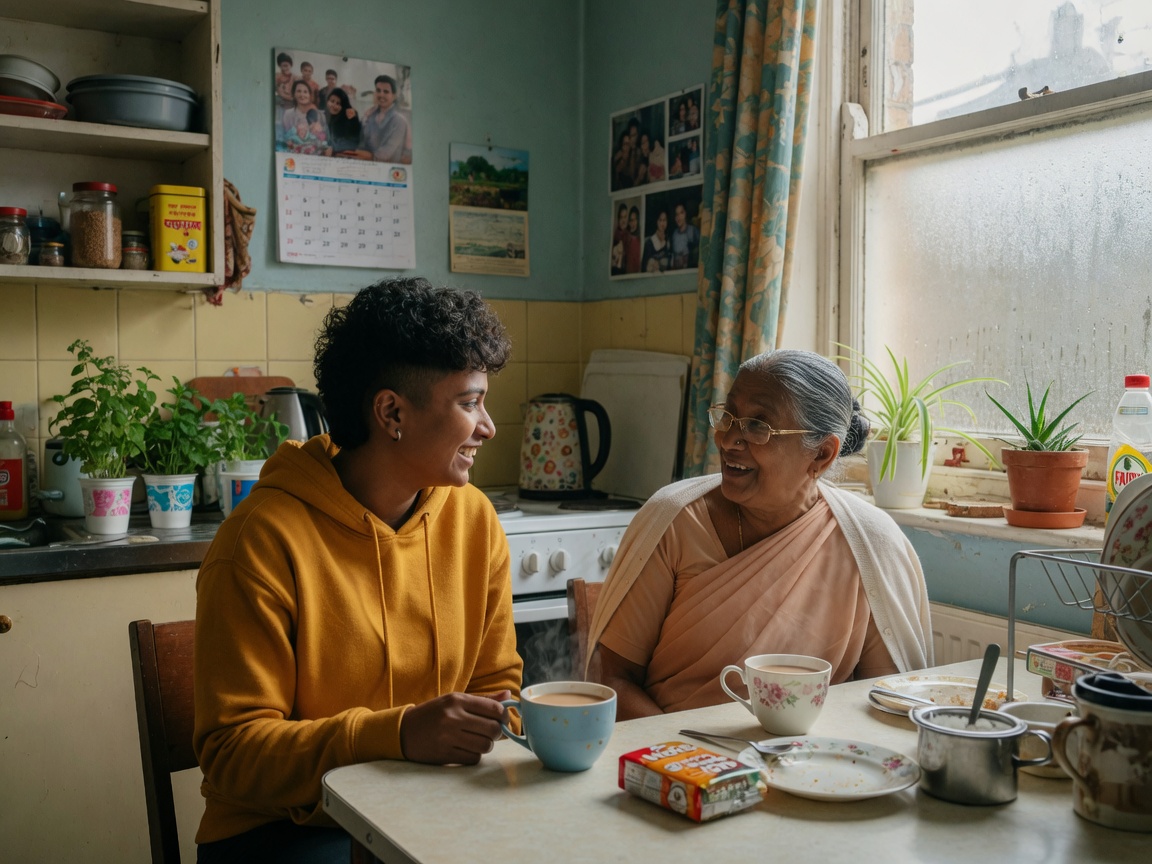
The dream is simple: walk in, salaam, and talk to Nanu or Dada in the language they are most comfortable in. The reality, for a lot of 2nd and 3rd generation Sylhetis, is a hug, a smile, and English.
You can change that with a short, repeatable visit script. Learn Syloti’s “Meeting Grandparents (Formal)” dialogue is built around a diaspora grandchild going home. Use it as a rehearsal, then make it yours.
Get those three right and even a simple sentence sounds like you belong in the room.
| English | Sylheti | Note |
|---|---|---|
| Grandpa/Grandma, are you well? | Dada/Dadi, afne bala aso ni? | First question after salaam. |
| Yes child, I am well. Are you well? | Oe ba, ami bala asi. Tui bala aso ni? | How an elder may reply to you. |
| Yes, I am well too. Mum and Dad send salam. | Zio, ami-o bala asi. Abba amma-eo afnare salam disoin. | Respectful yes + family greeting. |
| Come sit, will you eat rice? | Ai boiya, bhat khaiba ni? | Food is offered immediately. That is hospitality, not a test. |
Notice the shape: health, then sitting, then food. Skipping straight to “what’s the Wi-Fi?” is how English-only visits feel to elders.
Do not switch the whole conversation to English because one noun is missing. Keep the sentence in Sylheti and drop in an English word if you must — then look it up later in the offline dictionary. That is how bilingual homes actually work.
Next, learn the titles themselves: Nanu, Dada, Mama, Khala, Shurubaf. The wrong title is more awkward than a slow sentence.
Many families use Nanu for maternal grandmother and Dadi for paternal grandmother. Ask your parents which titles your house uses — they vary.
Use afne with elders. They may use tui back to you as a grandchild. Do not copy tui upward.
Ask if they are well, accept a seat, and expect to be offered food. Refusing too fast can feel abrupt.